
Key Takeaways
✅ Hanging ties on racks is the gold standard for preventing wrinkles and maintaining shape
✅ Rolling ties properly saves space and works well for drawer storage when done correctly
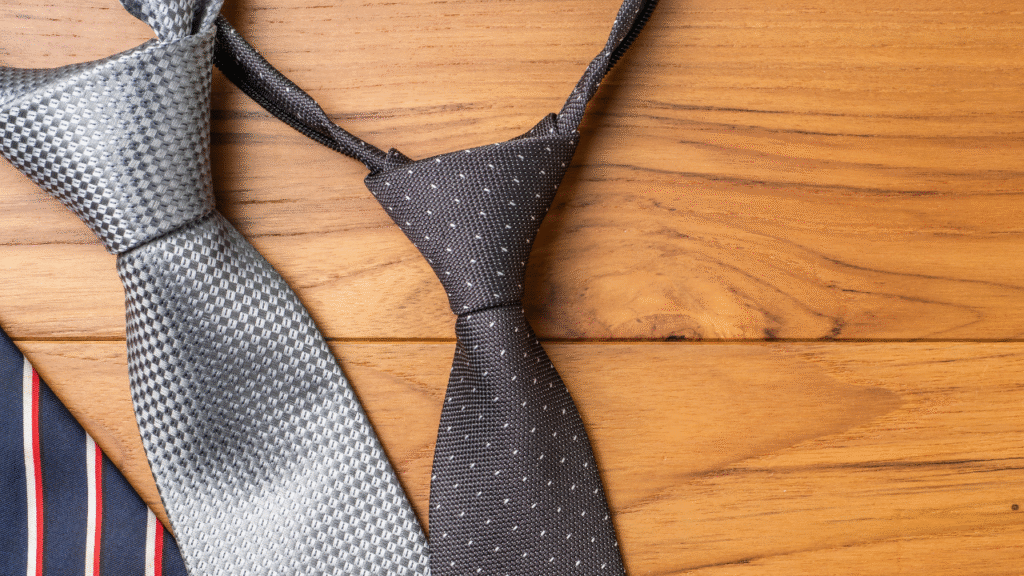
✅ Never store ties knotted – this creates permanent wrinkles and shortens tie lifespan
✅ Organize by color or pattern for quick morning selection and visual appeal
✅ Steam before storing to remove wrinkles and ensure crisp appearance
✅ Use fabric organizers over rigid materials to prevent deformation
✅ Climate-controlled storage protects expensive silk and wool ties from damage
Finding the perfect way to organize your ties can transform your morning routine from frantic searching to effortless selection. Whether you’re a business professional with dozens of neckties or someone building their first collection, proper tie storage protects your investment while keeping your closet looking sharp.
The truth is, there’s no single “best” method for organizing ties – the optimal approach depends on your closet space, collection size, and lifestyle. However, certain principles apply universally: never store ties knotted, always remove wrinkles before storage, and choose a system you’ll actually maintain.
In this detailed guide, we’ll explore every proven method for tie organization, from space-saving drawer solutions to elegant wall-mounted racks. You’ll discover professional techniques that protect fabric integrity, learn organization strategies that save morning time, and find the perfect storage system for your specific needs!
Why Proper Tie Storage Matters
Your ties represent a significant investment in your wardrobe. Quality silk ties can cost $50-200 or more, while designer pieces reach into the hundreds. Improper storage doesn’t just create unsightly wrinkles – it permanently damages the fabric fibers, shortens lifespan, and makes your ties look cheap regardless of their actual quality.
Ties can be made of wool, silk, cotton, linen, synthetic materials like polyester, or even leather in the case of bolo ties. Most materials will be stretched, wrinkled, or deformed when stored improperly.
The most common storage mistakes include leaving ties knotted after wearing, stuffing them in drawers without organization, and using storage methods that create pressure points or creases. These practices turn expensive accessories into wrinkled afterthoughts that detract from your professional appearance.
Beyond protecting your investment, organized tie storage saves valuable time during busy mornings. When ties are properly displayed or categorized, you can quickly select the perfect complement to your outfit without rifling through tangled piles or wrinkled messes.
The Cardinal Rule: Never Store Ties Knotted
Before take a look into specific storage methods, let’s address the most critical rule of tie care: always unknot your ties before storage. Storing your tie in its knotted form will create long-lasting wrinkles that will shorten the life of your tie and eventually look sloppy.
This might seem obvious, but many people fall into the habit of loosening their tie just enough to slip it over their head, leaving the knot intact for “convenience.” This practice creates permanent creases at the knot point and stretches the fabric in unnatural ways.
Instead, take the extra minute to properly reverse your tying process. Gently work the knot loose, then smooth the tie flat before storage. Your ties will thank you with years of crisp, professional appearance.
Method 1: Hanging Ties – The Professional Standard
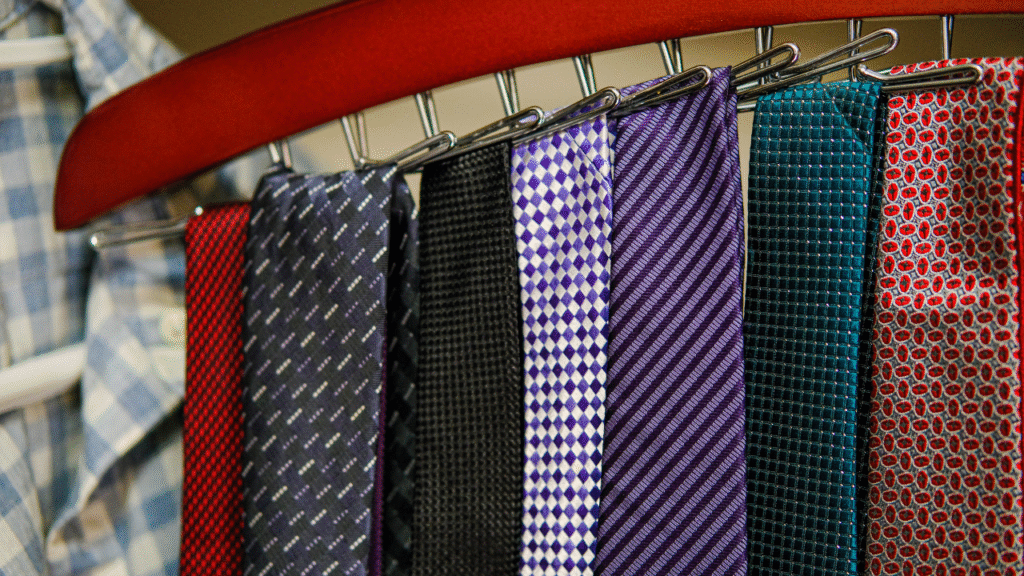
Hanging ties on dedicated racks remains the gold standard for tie storage among menswear professionals and serious collectors. This method keeps ties wrinkle-free, maintains their natural drape, and provides excellent visibility for selection.
Wall-Mounted Tie Racks
Wall-mounted racks offer the most space-efficient hanging solution. These systems typically feature multiple arms or pegs extending from a central mount, allowing you to hang 12-24 ties in a compact footprint. Tie racks are a great way to hang ties you wear everyday in tip-top shape, and can be conveniently hung on a wall or in a closet next your dress shirts to save closet space.
Installation is straightforward with basic wall anchors, and most racks can be positioned at any height that works for your closet layout. Some premium options feature individual pegs for each tie, preventing them from slipping or overlapping.
Pros:
- Prevents wrinkles completely
- Excellent visibility
- Space-efficient
- Professional appearance
- Easy access
Cons:
- Requires wall mounting
- Limited capacity per rack
- Ties can slip off pegs
Pull-Out Closet Racks
For built-in elegance, pull-out tie racks mount inside your closet and slide out for easy access. These systems integrate seamlessly with custom closet designs and can be positioned at optimal height for your reach.
The sliding mechanism keeps ties hidden when not in use, maintaining a clean closet appearance while providing full access when needed. Most pull-out racks accommodate 20-30 ties and can be combined with other closet accessories.
Rotating Tie Racks
Rotating or carousel-style racks maximize storage in minimal space. These compact units typically mount on closet rods or walls and spin to reveal different sections of your collection. Finally, there are also spinning racks. This is a space-efficient option since it’s more contained. It doesn’t have to take up an extended length of space in your closet.
While rotating racks offer impressive storage density, they work best for moderate collections. Overloading can make rotation difficult and increase the risk of ties falling off.
Over-the-Door Solutions
Door-mounted tie racks transform unused door space into valuable storage real estate. These racks hook over standard doors and typically feature multiple tiers of hanging space.
This option works particularly well for renters who can’t mount hardware on walls, though the weight capacity is more limited than wall-mounted alternatives. Look for models with padded door protectors to prevent damage.
Method 2: Drawer Storage with Rolling Technique
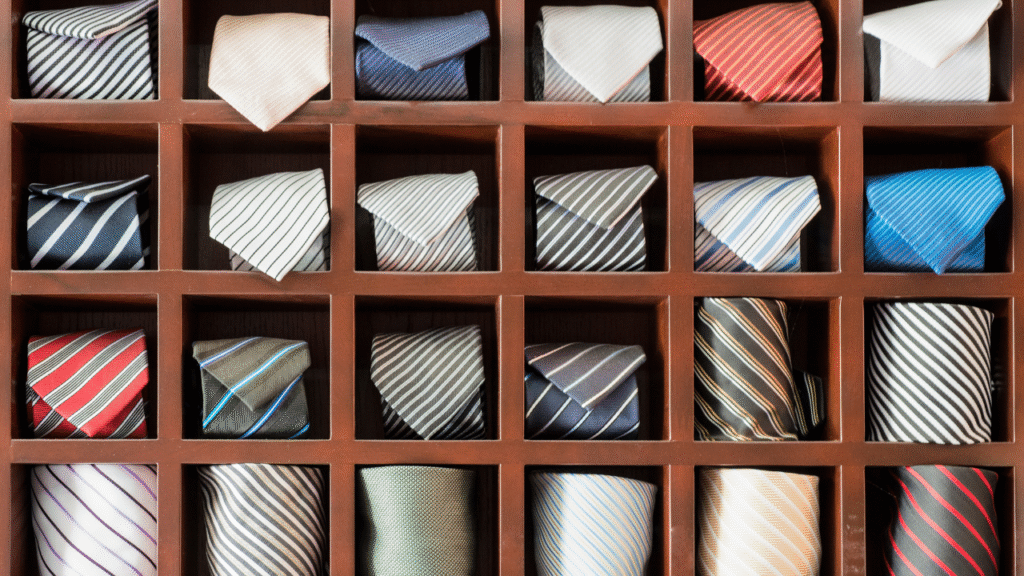
Drawer storage excels when closet hanging space is limited or when you prefer a minimalist closet appearance. The key to successful drawer storage lies in proper rolling technique and organization systems.
The Professional Rolling Method
Start with a clean and ironed tie. Lay the tie on a flat surface with the inside facing up. Lightly fold the tie in half. Starting at the folded end, roll the tie loosely.
This technique prevents wrinkles while maximizing drawer space. The loose rolling is crucial – tight rolling creates creases that can become permanent. When done correctly, rolled ties actually maintain their shape better than many hanging methods.
Step-by-Step Rolling Process:
- Ensure the tie is completely wrinkle-free
- Lay tie face-down on a clean, flat surface
- Gently fold in half lengthwise (don’t crease)
- Start rolling from the folded end
- Roll loosely and evenly
- Secure with the narrow end tucked in
Drawer Dividers and Organizers
Fabric organizers will allow your bigger ties to expand, and they are superior to rigid plastic or wood organizers, which will deform your ties over time. Choose dividers that create individual compartments for each rolled tie, preventing them from shifting and becoming tangled.
Fabric or soft-sided dividers adapt to different tie thicknesses and prevent pressure points that can damage delicate materials. Adjustable dividers let you customize compartment sizes based on your collection.
Best Organizer Features:
- Fabric or soft construction
- Adjustable compartments
- Non-slip bottom
- Adequate depth (3-4 inches minimum)
- Easy visibility
Flat Drawer Storage
For wider, shallower drawers, laying ties flat provides excellent visibility and eliminates any rolling concerns. The first is merely laying them flat across your drawer. Make sure you don’t stack them on top of each other as you want every tie to be visible so you can choose the right one and prevent some from being buried in the bottom of a pile.
This method works best for collections under 20 ties and requires drawers at least 60 inches long to accommodate full-length ties without folding.
Method 3: Specialized Tie Boxes
Tie boxes offer premium storage with display potential. These purpose-built containers protect ties while showcasing your collection like fine jewelry.
Display Boxes
High-end tie boxes feature glass tops and individual compartments, creating an attractive display piece for dressers or closet shelves. Like watch boxes, some tie boxes are meant to be displayed. These decorative tie boxes can add a dapper touch to your closet.
These boxes work particularly well for special occasion ties or vintage pieces that deserve extra protection and presentation.
Travel Cases
Portable tie cases enable wrinkle-free transport for business trips. These compact cases typically hold 3-6 ties using specialized folding or rolling configurations designed for luggage compatibility.
Travel Case Features:
- Compact size
- Secure closure
- Interior organization
- Wrinkle prevention
- TSA-friendly design
Method 4: Creative Storage Solutions
For unique spaces or budget-conscious organizers, creative solutions can provide effective tie storage using common household items or simple modifications.
Shower Rod Systems
Attached a drapery rod to the closet wall and used 12 pack shower clips from the dollar store. Ties are very easy to take off and place back on. This budget-friendly approach creates an instant hanging system using tension rods and clips.
Position the rod at shoulder height in your closet and use quality clips that won’t snag delicate fabrics. This system excels for renters or temporary storage needs.
Hangers with Clips
Standard suit hangers with clips can hold multiple ties, though this method requires careful spacing to prevent overlapping. Use padded clips to protect fabric and limit each hanger to 3-4 ties for easy access.
Scarf Storage Adaptations
Products designed for scarf storage often work excellently for ties. These organizers typically feature individual compartments or hanging loops sized perfectly for necktie storage.
Organization Strategies That Save Time
Beyond choosing a storage method, how you organize your ties determines morning efficiency and collection maintenance.
Color-Based Organization
When your ties are organized by color, you can easily find the one to match your suit each morning. You’ll know right where your blue ties are, red ties, etc. Organizing by color helps keep your collection neat and easy to navigate.
Arrange ties in color families: all blues together, reds in one section, patterns in another. This system works intuitive for most people and speeds morning selection.
Color Organization Tips:
- Group similar shades together
- Separate solids from patterns
- Create a neutral section for versatile ties
- Use lighting that shows true colors
Pattern and Style Grouping
For extensive collections, organizing by pattern type creates visual clarity. Group solid ties, stripes, dots, and novelty patterns separately. This approach helps prevent pattern clashing and makes it easier to find specific tie types.
Pattern Categories:
- Solid colors
- Stripes (diagonal, horizontal, pin)
- Dots and geometrics
- Paisley and florals
- Club and novelty patterns
Seasonal Rotation
Professional wardrobes often include seasonal ties – lighter colors for spring/summer, deeper tones for fall/winter. Create separate storage areas or use labeled sections to rotate seasonal collections.
Store off-season ties in protective boxes or garment bags, bringing them out as weather changes. This approach keeps daily selection manageable while protecting less-used pieces.
Frequency-Based Placement
Position your most-worn ties in the most accessible locations. Reserve prime real estate for daily rotation pieces, while special occasion ties can occupy less convenient spots.
This practical approach reduces daily handling of your entire collection, extending the life of dress ties and formal pieces.
Essential Care Tips Before Storage
Proper preparation before storage dramatically extends tie life and maintains appearance.
Steam Treatment
Never iron your ties to get rid of wrinkles or creases. The direct heat from your iron can damage the fibers in your tie. Instead, invest in a handheld steamer.
Steam removes wrinkles without direct heat damage that can permanently alter fabric texture, especially in silk ties. For more detailed fabric care guidance, the Smithsonian’s Museum Conservation Institute provides excellent resources on preserving textile materials. Hang ties while steaming and allow them to cool completely before storage.
Steaming Process:
- Hang tie from narrow end
- Steam lightly from 6 inches away
- Work from top to bottom
- Allow complete cooling
- Gently smooth any remaining wrinkles
Cleaning Considerations
Address stains immediately to prevent permanent setting. For silk ties, professional cleaning is usually safest, while cotton and polyester ties may tolerate gentle hand washing.
Never attempt to remove stains from silk ties with water or commercial cleaners without professional guidance. The risk of permanent damage outweighs potential savings.
Climate Control
Always store your ties in a space where temperatures and humidity are regulated. Otherwise, mold and mildew may grow. Temperature fluctuations may also damage the fabric.
Maintain consistent temperature and humidity in storage areas. According to the Library of Congress Preservation Directorate, proper environmental conditions are crucial for textile preservation. Basements, attics, and other areas prone to temperature swings can damage natural fibers over time.
Ideal Storage Conditions:
- Temperature: 60-70°F (15-21°C)
- Humidity: 45-55%
- Protection from direct sunlight
- Good air circulation
- Protection from dust
Bow Tie Storage Considerations
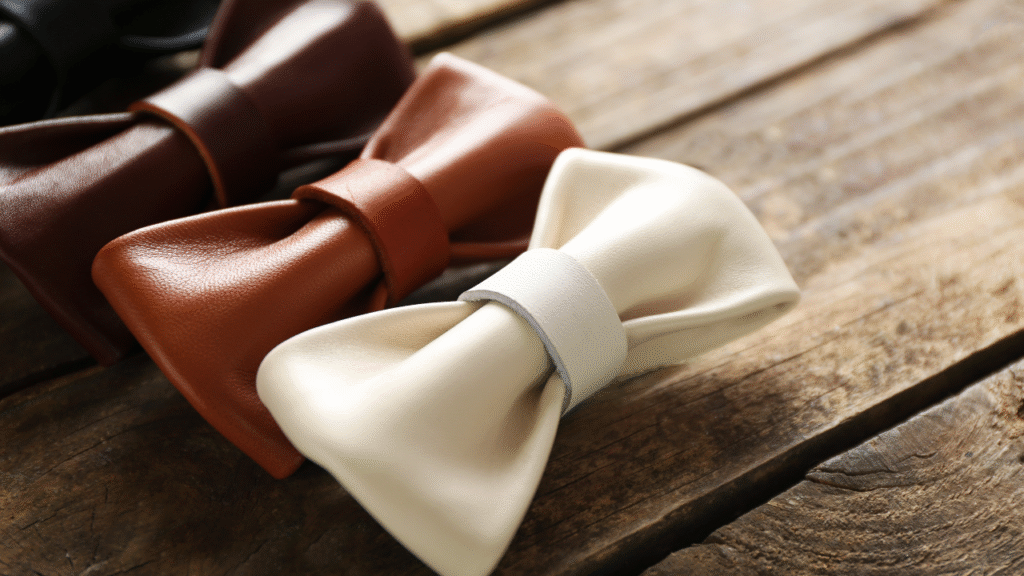
Bow ties require special attention due to their unique shape and smaller size. When storing bow ties, keep them separated from the long ties. On a hanging rack, move bow ties to one side and longer neckties to the other. Bow ties are small and awkwardly shaped. If you store them among the long ties, you may knock them down when pulling out a long tie.
Dedicated Bow Tie Solutions
Bow tie boxes with individual compartments prevent crushing and tangling. These specialized storage solutions maintain the bow tie’s shape while protecting delicate fabrics.
Rolling vs. Flat Storage
Never store a bow tie in a knot. It will undoubtedly wrinkle, and you’ll never be able to tie it precisely the same way twice. Bow ties can be rolled using the same technique as regular ties, though flat storage in shallow drawers often works better for their dimensions.
Budget-Friendly Storage Solutions
Effective tie organization doesn’t require expensive custom solutions. Many budget options provide excellent functionality with minimal investment.
DIY Hanging Systems
Create custom hanging systems using dowel rods, wall brackets, and hooks from hardware stores. The dowels were covered with ultrasuede to help keep the ties from slipping.
Repurposed Organizers
Jewelry boxes, tackle boxes, and other compartmentalized storage can work excellently for rolled ties. Look for organizers with soft interiors and adjustable dividers.
Dollar Store Solutions
Basic shower curtain rings on tension rods create functional hanging storage for under $10. While not as elegant as purpose-built solutions, these systems provide effective organization on tight budgets.
Common Storage Mistakes to Avoid
Learning from common mistakes prevents damage and frustration with your tie storage system.
Overcrowding
If you don’t have a tie organizer, be careful to prevent over-stuffing your drawers. Over-stuffing will cause your ties to “smush” together and appear as if they were folded every 3 inches.
Allow adequate space between ties regardless of storage method. Overcrowding defeats the purpose of careful organization and can damage fabrics.
Wrong Hanger Types
Do not use thin metal dry cleaner hangers as they can crease your ties. Thin wire hangers create pressure points that can permanently crease ties. Use thick plastic or wooden hangers if adapting standard hangers for tie storage.
Mixing Storage Methods
While combining storage methods can work, avoid frequently moving ties between different systems. Each transfer increases handling and potential for damage.
Ignoring Maintenance
Storage systems require periodic maintenance to remain effective. Clean organizers regularly, check for loose hardware, and adjust dividers as collections grow or change.
Advanced Organization for Large Collections
Serious collectors and professionals with 50+ ties need sophisticated organization systems to maintain accessibility and protection.
Cataloging Systems
Consider photographing ties and creating digital catalogs for extensive collections. This approach helps track what you own and reduces handling when selecting ties.
Multi-Zone Storage
Divide large collections into zones: daily wear, formal occasions, seasonal pieces, and special collections. Each zone can use different storage methods optimized for its use frequency.
Rotation Schedules
Implement rotation schedules for large collections to ensure even wear and prevent some ties from being forgotten. Move recently worn ties to the back of the rotation.
Maintenance and Long-Term Care
Proper storage is just one aspect of tie longevity. Regular maintenance keeps your collection looking professional for years.
Regular Inspection
Inspect stored ties quarterly for signs of damage, staining, or pest issues. Early detection prevents minor problems from becoming major damage.
Professional Cleaning Schedule
Establish relationships with quality dry cleaners experienced with fine ties. Professional cleaning every 6-12 months for frequently worn ties maintains appearance and extends life.
Collection Evaluation
Annually evaluate your collection for pieces that no longer fit your style or lifestyle. Donating unused ties makes room for new additions while keeping your storage system manageable.
Frequently Asked Questions
Q: How many ties can I store per rack/drawer/box?
This depends on the specific storage solution, but general guidelines are:
- Wall-mounted racks: 12-24 ties
- Drawer with dividers: 15-30 ties (depending on drawer size)
- Tie boxes: 6-12 ties
- Pull-out closet racks: 20-30 ties
Q: Should I separate silk ties from other materials?
While not strictly necessary, storing silk ties separately can provide extra protection from rougher materials like wool or polyester. Silk ties also benefit from slightly different storage conditions.
Q: Can I store ties in garment bags?
Yes, garment bags work well for long-term storage or seasonal rotation. Use breathable fabric bags rather than plastic to prevent moisture buildup. Ensure ties are clean and wrinkle-free before bagging.
Q: How often should I reorganize my tie storage?
Review and reorganize your tie storage system every 6-12 months, or whenever you add/remove a significant number of ties. Regular maintenance keeps the system functional and identifies any needed improvements.
Q: What’s the best way to store vintage or delicate ties?
Vintage ties benefit from individual protection in acid-free tissue paper or breathable fabric pouches. Store flat in boxes rather than hanging to prevent stress on aging fabrics. Consider professional conservation for particularly valuable pieces.
Q: Can I use cedar blocks or sachets in tie storage?
Yes, but use them sparingly and ensure they don’t directly contact ties. Cedar can help deter insects, while lavender sachets provide pleasant scent. Avoid mothballs or strong chemicals that can damage fabrics or leave odors.
Q: How do I prevent ties from slipping off hanging racks?
Look for racks with textured or padded surfaces, small lips on the ends of arms, or individual hooks for each tie. Some users add small pieces of velcro or rubber strips to smooth rack arms for better grip.
Q: Is it okay to fold ties for travel?
For travel, minimal folding is acceptable if done carefully. Fold as few times as possible, use tissue paper between folds, and steam immediately upon arrival. Specialized travel cases are preferable for valuable ties.
For more expert tips on home organization and lifestyle management, explore our complete guides to clothes organization and wardrobe management. Don’t forget to check out our comprehensive clothing care resources for maintaining your entire wardrobe investment.
