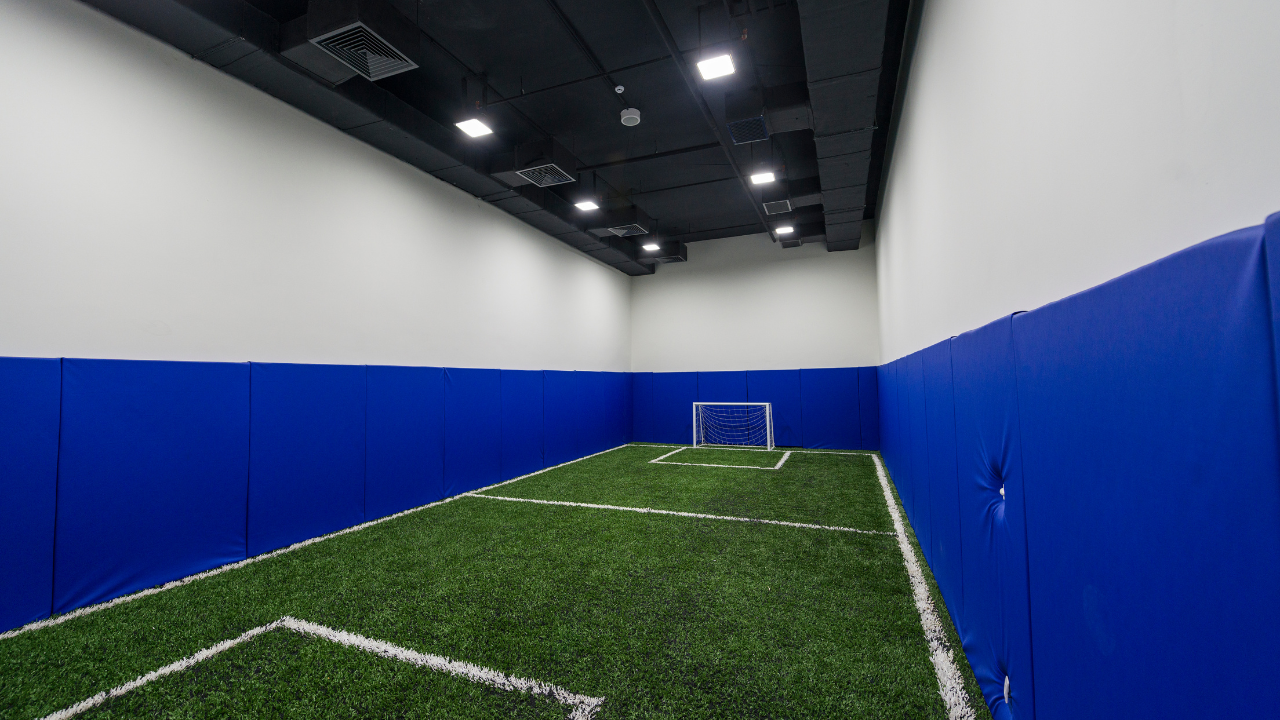
Millions of people around the world (including my own, soccer-obsessed family!) love soccer, and owning an indoor soccer field at home, or being able to have one in a separate space enables year-round practice, all without worrying about weather conditions. If you plan to construct a miniature training zone in your garage or basement, or you dream about developing a bigger facility, this guide provides step-by-step instructions for building your own DIY indoor soccer field.
Step 1: Choose the Right Space
Make sure to measure the space where your indoor soccer field will be set up before starting any construction. The dimensions of your space will establish both the size of your field and the range of possible activities.
Ideal Locations:
– Small-scale training sessions and drills run perfectly in the garage.
– Basements are excellent choices for indoor soccer fields as they offer controlled environments which work best in cold weather regions.
– Empty warehouses and barns offer adequate space to set up complete practice fields.
– An Attic or Spare Room provides adequate space for practicing footwork drills and fundamental soccer skills.
Large indoor spaces make suitable venues for competitive games when they provide enough room.
Tip: The designated space should feature sufficient ventilation and lighting while maintaining a solid and level surface to reduce injury risks.
Step 2: Measure and Plan the Layout
After selecting your location, take precise measurements to establish the available space for setting up your soccer field. The dimensions of a standard indoor soccer field measure 200 feet in length and 85 feet wide yet for personalized projects you can resize the field to fit your limited space.
Key Considerations for you DIY Indoor Soccer Field:
Goal size: Standard indoor soccer goals measure 6.5 feet in height and 12 feet in width yet you can modify their dimensions for confined spaces.
Playing surface: Utilize tape or paint to mark both the sidelines and goal areas on your playing surface.
Spectator area: When space is available, create a distinct area where people can sit or stand to watch the game.

Step 3: Choose the Right Flooring
The flooring stands as one of the essential components when designing your DIY indoor soccer field. The floor should deliver optimal traction while reducing injury risks and ensuring the ball rolls consistently.
Best Flooring Options:
– Artificial Turf excels as the top choice because it simulates outdoor soccer field conditions most accurately.
– Rubber Flooring provides cushioning and shock absorption which helps reduce joint impact.
– Foam Tiles provide protective surfaces suitable for young athletes and soft play environments.
– Hardwood or concrete floors become suitable soccer surfaces when they have a non-slip mat or turf overlay for better traction.
Tip: Carpets should be avoided because they lead to friction burns and make ball rolling uneven.
Step 4: Install Soccer Goals
Your indoor field needs soccer goals which vary by available space and financial resources.
Types of Goals:
– Portable goals can be easily folded and moved which makes them perfect for multi-purpose spaces.
– Wall-Mounted Goals remain attached to walls and are intended for permanent setups.
– PVC Pipe Goals represent an affordable homemade solution created from PVC pipes and netting.
DIY PVC Goal Plan:
Purchase 1-inch PVC pipes and connectors.
Cut pipes to your desired goal size.
Assemble using T-joints and elbows.
Attach a durable net with zip ties.
Step 5: Add Wall and Ceiling Protection
The rapid gameplay style of indoor soccer makes wall and ceiling protection essential to prevent damage.
Protective Measures:
Protective Wall Padding minimizes injuries while safeguarding walls from forceful strikes.
Install mesh or netting behind goals to capture balls that go astray.
Ceiling Covers function to protect light fixtures while stopping balls from causing damage.
Tip: When using shared areas like garages for playing, covering windows with safety film or plexiglass should be considered.

Step 6: Set Up Proper Lighting and Ventilation
Good lighting and proper airflow create a safe and comfortable playing environment.
Lighting Options:
LED Overhead Lights – Bright and energy-efficient.
Track Lighting – Focuses light on key areas.
Portable Floodlights – Good for temporary setups.
Ventilation Tips:
Employ fans or air purifiers to facilitate air movement.
Basements require dehumidifiers to control moisture accumulation.
Step 7: Mark the Field Lines
Drawing field boundaries establishes a structured playing space for players.
Methods for Marking:
Tape – Great for temporary fields.
Paint and chalk provide long-lasting markings on the field.
Built-in lines are a feature of some artificial turf products.
A measuring tape and chalk should be used to make precise markings for field sidelines, center circles and goal areas.
Step 8: Add Training Equipment
Adding training equipment to your indoor soccer field will improve its functionality.
Essential Equipment:
Dribbling drills and agility training require cones and markers to be effective.
Rebound Nets are beneficial for practicing passing accuracy as well as ball control exercises.
Mini Hurdles – Improves agility and foot speed.
Weighted Balls – Enhances strength and ball control.
Step 9: Personalize Your Space
You can distinguish your indoor soccer field by incorporating custom branding elements and decorative features.
Personalization Ideas:
Custom Banners – Display your favorite team’s logo.
Motivational Posters – Inspire players with soccer quotes.
Wall Murals – Create a stadium-like atmosphere.
Step 10: Maintain Your Indoor Soccer Field
Systematic upkeep of the playing field guarantees both player safety and fun during the game.
Maintenance Tips:
Regular cleaning of the flooring should be performed to eliminate dirt and debris.
Perform routine inspections of goalposts and nets to identify any signs of wear and tear.
Inspect wall protection for any needed repairs.
Replace damaged training equipment as needed.
Building your own indoor soccer field serves as a fulfilling endeavour that opens up limitless opportunities for both practice sessions and playful enjoyment. You can create a functional soccer training ground by choosing the right space, installing suitable flooring, setting up goalposts, and implementing safety precautions. Your indoor soccer field serves as an excellent enhancement for home or community spaces for casual play or competitive training.
Ready to get started? Take your soccer ball and begin creating your ideal indoor soccer arena now!
